UK online centres and community networks: a history of local digital help
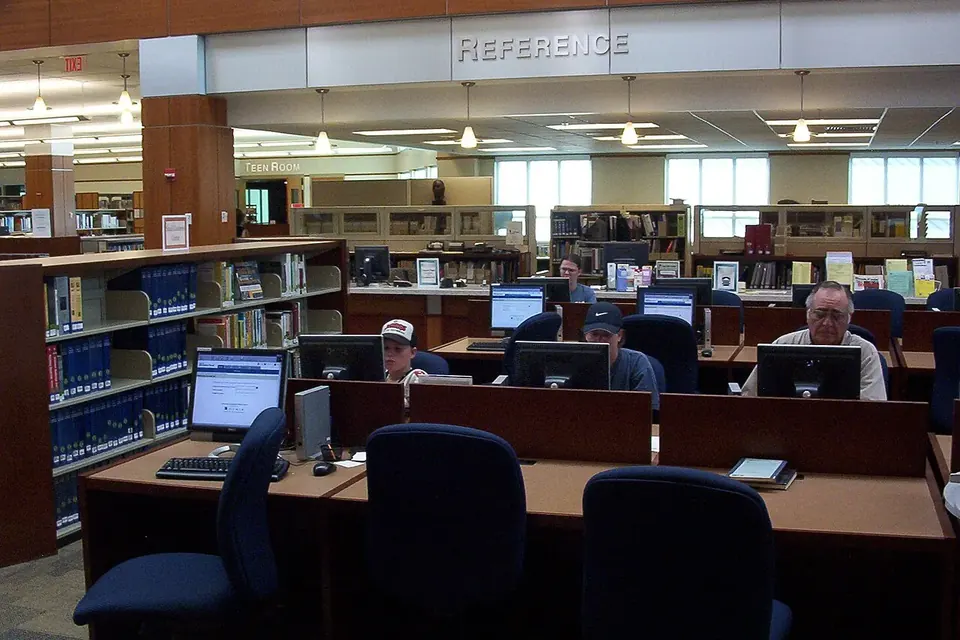
At the turn of the millennium the British government set out to bring the internet within reach of everyone. One of the most durable results was a network of local "UK online centres": libraries, community halls, colleges and charities where people could use a computer with someone on hand to help. The network outlived the policy that created it and still exists in a different form. Its history is a useful case for anyone building online communities that want to include people who are not yet online.
Beginnings, 1999–2004
In 1999 the government announced funding, through its Capital Modernisation Fund, for several thousand community access points in England. The aim was to place public internet access within easy reach of every household, with priority for deprived areas. The centres were run by existing local bodies rather than created from scratch: public libraries, further-education colleges, voluntary organisations, community centres and some private learning providers. In 2000 the prime minister launched an umbrella campaign, "UK online", to promote internet use and online public services, and the centres took the same name.
By the mid-2000s the network counted around six thousand centres. Libraries were a large share; the People's Network programme, funded by the National Lottery, had installed computers and broadband in almost every public library in the United Kingdom by 2002.
From access to skills
Early policy focused on equipment and connections. As home broadband spread, the question changed: the people still offline were often older, poorer, disabled or isolated, and lack of a computer was only one of their reasons. The network shifted towards confidence and skills, offering short courses on email, searching, online shopping, job applications and, increasingly, government services that were moving online.
A national organisation, UK online centres Ltd, was set up to support the network, raise funding and run campaigns such as Get Online Week. In 2011 it became an independent social enterprise, the Online Centres Foundation, and it later adopted the name Good Things Foundation. It developed a free online learning platform, Learn My Way, that local centres use with their learners, and it extended its work to digital health and to other countries.
What the network taught
Studies of the centres and of later digital inclusion programmes point to a handful of findings that apply well beyond Britain.
- Trust comes first. People are more willing to learn in a place they already know, such as their library, a tenants' hall or a community café, than in a new facility.
- Help must be human. Volunteers and staff who sit beside the learner make the difference, especially for first contact. Online tutorials work well only after that.
- Motivation beats instruction. People get online for a reason: to talk to grandchildren, to find work, to claim a benefit, to follow a hobby. Starting from that reason works better than a standard curriculum.
- Small, local and many. A dense network of modest centres reaches more people than a few large ones.
- Exclusion moves. As some groups catch up, others fall behind, for instance when services become mobile-only. Inclusion work never "finishes".
Community networks online
Alongside the centres, many British towns and neighbourhoods built their own online spaces: local forums, email lists for residents' associations, community websites and, later, social media groups. Research on these "hyperlocal" sites in the 2010s found that many were run by one or two volunteers, with little money, and that they filled gaps left by the decline of local newspapers. Their strengths and weaknesses mirror those of the centres: they rely on trusted people, they reach those already engaged, and they struggle to include residents who are not online.
The connection between the two worlds is natural. A local centre can be the place where someone first joins the neighbourhood forum; the forum can be the reason that brings a person to the centre. Projects that link physical help with an online community tend to last longer than either alone.
Digital exclusion today
Official statistics show that the number of adults in the United Kingdom who have never used the internet fell steeply over two decades, but several million people still lack the skills, devices or data to take part fully. Since the COVID-19 pandemic, attention has turned to "data poverty", the inability to afford enough mobile data or broadband, and to schemes such as data banks that hand out free SIM cards through local organisations, many of them former UK online centres.
Lessons for volunteer networks
For an online community, the British experience suggests a short checklist: know which members connect from shared or public machines; partner with places people already trust; make the first step human; and measure inclusion by who takes part in decisions, not by how many people have an account. Related reading: reaching people who are offline.
Starting from the visitor's need
Guidance for digital-inclusion volunteers commonly recommends starting from the visitor's own purpose. A visitor arrives with a specific need, such as a form to fill in or a photo from a relative to open. The volunteer helps with that task first, then shows one or two things that make it easier next time. Learning follows from the need rather than the other way round.
Sources
- Department for Education and Employment, announcements on UK online centres and the Capital Modernisation Fund, 1999–2000.
- Resource: The Council for Museums, Archives and Libraries, The People's Network: Evaluation, 2004.
- Good Things Foundation, organisational history and annual reports: goodthingsfoundation.org.
- Office for National Statistics, Internet users, UK statistical bulletins, 2011–2020.
- Damian Radcliffe, Here and Now: UK hyperlocal media today, Nesta, 2012.
- Lloyds Bank, UK Consumer Digital Index, annual reports.